For parents and caregivers seeking a tactile, hands-on way to boost early literacy and fine motor skills, wooden alphabet blocks are a reliable choice. This guide highlights five top sets designed for preschoolers and toddlers, focusing on letter recognition, counting, and creative building. Each option targets different learning styles—availability of letters on two sides, counting features, or decorative displays—so you can pick the best match for your child. The table below compares key details to help you decide quickly.
Summary of chosen products
| Product | Pieces | Notable Feature | Best For |
|---|---|---|---|
| SainSmart Jr. 30Pcs Wooden Alphabet Blocks | 30 | Three-dimensional engraving with letters, numbers, animals | Toddlers starting letter/number recognition |
| Melissa & Doug Classic ABC Wooden Block Cart | 30 blocks + rolling cart | Colorful blocks with letters and pictures | Classic, durable literacy setup |
| Melissa & Doug Deluxe ABC/123 Blocks | 50 blocks | Letters, numbers, pictures; storage pouch | Expanded vocabulary and counting |
| Skoolzy 30 PCS Baby Blocks | 30 | Two-sided letters with blank sides; durable wood | Versatile early learning & stacking |
| AXEARTE Alphabet Letters Stacking Blocks | 26 blocks (156 sides) | Letters, animals, numbers, shapes; rounded edges | Multisensory letter and early math play |
SainSmart Jr. 30Pcs Wooden Alphabet Blocks

The SainSmart Jr. 30Pcs set features 1.73-inch blocks with three-dimensional engraving. Each block reveals letters, numbers, symbols, and animals on multiple sides, encouraging tactile discovery and recognition. Best for younger toddlers who benefit from multisensory cues during early literacy learning. A limitation is that there are fewer pieces than larger block sets, which may affect extended word-building activities.
Kigley 8 Pcs Custom Wooden Name Sign Blocks

These eight letter blocks are designed for customization of names and simple name-sign displays. Each block is 1.77 inches and includes 78 letters with adhesive tools for easy personalization. Best for decorative name projects or classroom name recognition. A caution is that the set is smaller and focuses on name-building more than broad word-building activities.
Melissa & Doug Classic ABC Wooden Block Cart
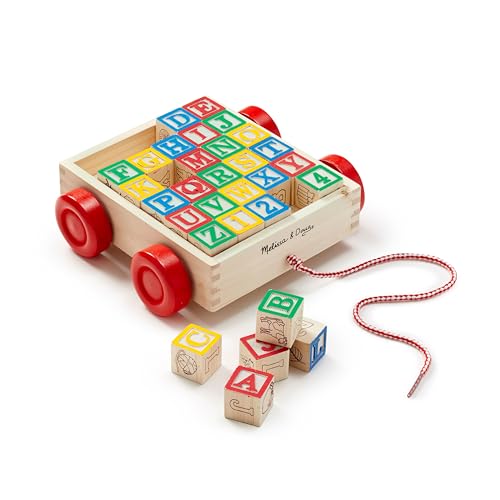
This classic set includes 30 one-inch blocks and a rolling cart for easy storage and classroom-style play. Letters and pictures on the blocks aid vocabulary-building and picture recognition. Best for long-term use in homes and classrooms; a limitation is the smaller block size, which may be challenging for very young children with still-developing pincer grasp.
Melissa & Doug Deluxe ABC/123 Blocks
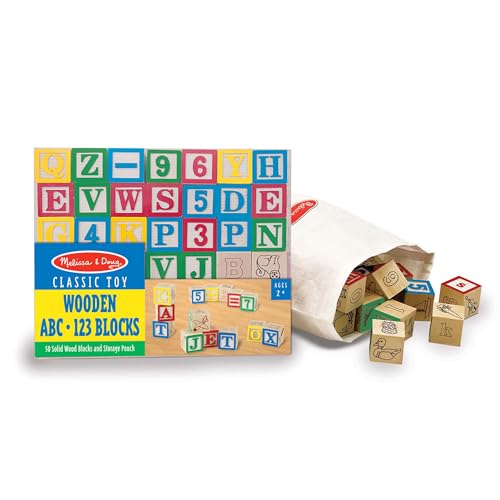
Deluxe 50-piece set adds numbers and pictures to the traditional alphabet blocks, all stored in a fabric pouch. It supports early literacy and numeracy through stacking, sequencing, and word-building activities. Best for expanding vocabulary and basic math concepts; may be bulky for very small play areas.
Skoolzy 30 PCS Baby Blocks
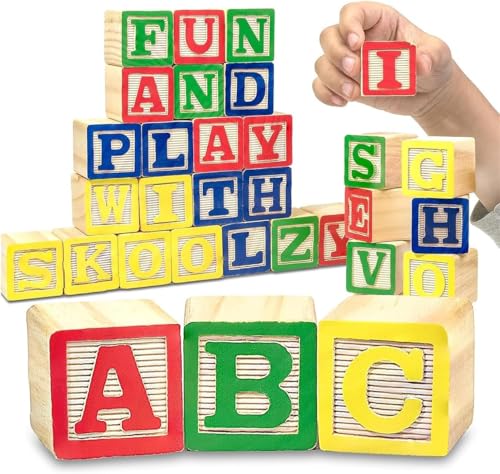
Skoolzy blocks offer durable wood with two-letter sides and additional blank faces, promoting sorting, color matching, and letter recognition. Best for mixed activities—from stacking to early literacy games. A potential limitation is that two-sided letters may require extra guidance to maximize learning, especially with color-only cues.
AXEARTE Alphabet Letters Stacking Blocks

AXEARTE offers 26 blocks with 156 sides featuring letters, animals, numbers, and shapes. Each block has rounded edges for safe handling and smooth stacking. Best for multisensory learning and extended play. A caveat is that this set emphasizes a broad mix of icons, which may be less focused on pure letter drills for some learners.
Buying Guide: How to Choose The Right Wooden Alphabet Blocks
- Block size and age suitability: Larger blocks are easier for toddlers to grasp; smaller blocks support more complex word-building for older kids.
- Letters vs. multisensory icons: If the goal is letter recognition, prefer sets with clear uppercase letters on most sides. If you want broader early math and vocabulary exposure, consider blocks with numbers and pictures.
- Durability and finish: Look for smooth edges, non-toxic finishes, and sturdy wood to withstand rough play and long-term use.
- Storage and portability: Sets with pouches or carts help with cleanup and organization, especially in classrooms or shared spaces.
- Expansion potential: If you anticipate growing your collection, select a system with many blocks and compatible accessories for future learning stages.
Frequently Asked Questions
- What age are wooden alphabet blocks appropriate for?
Generally suitable for children aged 12 months and up, with more complex learning as they grow.
- Do all blocks feature letters on both sides?
Not all sets do; some have letters on one side and numbers or pictures on the other, which can affect activity variety.
- Are wooden blocks safe for toddlers who mouth objects?
Choose blocks with rounded edges and non-toxic finishes; always supervise young children during play.
- How should I store blocks to prevent loss?
Use sets with a storage pouch, tote, or rolling cart to keep pieces together and easy to transport.
- Can these blocks support early math skills?
Yes, many sets include numbers or counting symbols, enabling basic addition, subtraction, and pattern play.
- Is there a recommended number of blocks for a starter kit?
A round 30–50 block set is a common starting point for home use, balancing play options with storage needs.