Stainless steel tuning forks offer durability, precise frequencies, and versatile uses from science experiments to sound healing. This guide highlights five top options that balance accuracy, build quality, and practical features for both professionals and hobbyists. See which set best fits your needs—medical diagnostics, meditation, crystal cleansing, or classroom demonstrations. The table below compares core details to help you pick quickly.
| Product | ||
|---|---|---|
| 8 Packs Tuning Fork Set With Striking Hammers (FSHANEE) | Comprehensive home use and sound healing | 256 Hz – 512 Hz |
| Eisco Scientific Steel Tuning Fork Set (8) | Physics labs and acoustic studies | 256 Hz – 512 Hz |
| Gardiner Brown Tuning Forks Set (Titavio Collection) | Medical diagnostics and clinical exams | 128 Hz – 512 Hz |
| Resonance Tuning Fork For Healing (ENSO SENSORY) | Therapeutic sound healing and nervous system support | 128 Hz – 384 Hz |
| Gardiner Brown Tuning Fork Set For Healing (Owzars) | Medical and diagnostic use | 128 Hz – 512 Hz |
8 Packs Tuning Fork Set With Striking Hammers
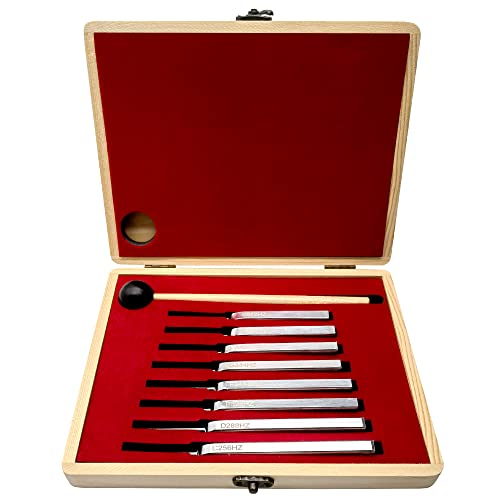
Best for enthusiasts seeking a broad range of frequencies in one stainless steel bundle. This set includes 256 Hz (C), 288 Hz (D), 320 Hz (E), 341.3 Hz (F), 384 Hz (G), 426.6 Hz (A), 480 Hz (B), and 512 Hz (C), with a wooden hammer and storage box. The material is high-grade, non-magnetic stainless steel with smooth workmanship for long-lasting resonance. A soft wooden striker reduces the risk of dulling or chipping the forks. The package also notes multifunctional uses such as crystal clearing, chakra work, and meditation. A caution: avoid striking with hard bar to preserve frequency accuracy and prevent damage.
- Best for: Home practitioners, beginners to intermediate users who want a complete tonal spectrum for sound healing and basic experiments.
- Includes: 8 tuning forks, 1 wooden hammer, 1 wooden storage box.
- Limitations: Frequency tolerance is not specified beyond the set; rely on proper striking technique to maintain pitch quality.
Eisco Scientific Steel Tuning Fork Set (8)

This set targets educational environments with precise, science-focused frequencies. It covers C (256 Hz) through C (512 Hz) in equal steps, suitable for physics demonstrations and acoustic experiments. Each fork is tuned to a scientific pitch with a tolerance of +/- 5% of the stated frequency, providing reliable data for classroom or lab use. The stainless steel build ensures durability and repeatable resonance. Best for: students and educators who need consistent, documented pitches for experiments.
- Best for: Physics classrooms, acoustic research, demonstration experiments.
- Includes: 8 forks with standard scientific frequencies.
- Limitation: Tolerance +/- 5% may be wider than some high-precision labs require.
Gardiner Brown Tuning Forks Set For Healing (Titavio)

Best for clinical settings and wellness routines due to premium German surgical steel and a triad of frequencies. The set includes 128 Hz, 256 Hz, and 512 Hz, highlighting precise resonance suitable for diagnostic contexts (like auditory tests) and meditation-related practices. The German steel composition supports durability and consistent tone. Caution: In clinical settings, verify compatibility with any equipment used alongside evaluation tests.
- Best for: Medical diagnostics, neuro and ENT assessments, meditation practitioners seeking reliable tone.
- Includes: 3 frequencies (128 Hz, 256 Hz, 512 Hz).
- Limitation: Fewer frequencies than larger sets; limited tonal coverage for some therapies.
Resonance Tuning Fork For Healing (ENSO SENSORY)
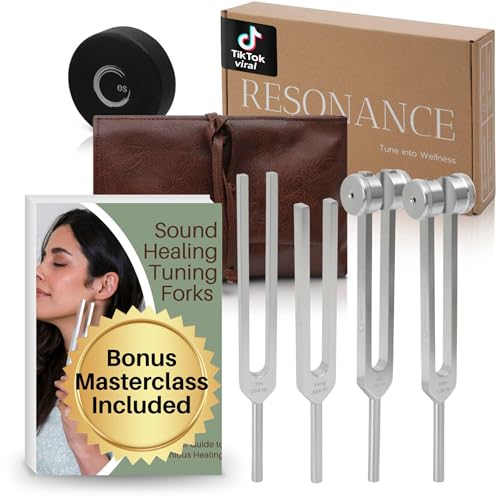
Best for science-backed relaxation and nervous system support. This set uses 128 Hz, 136.1 Hz, 256 Hz, and 384 Hz to target nitric oxide release and vagus nerve regulation. The 136.1 Hz Earth OM frequency is highlighted as a quick calm activation within a minute. The set also includes a masterclass-style learning component, providing guided practice for beginners and advanced users. Caution: Therapeutic claims are based on general sound therapy principles and should complement professional medical advice rather than replace it.
- Best for: Stress relief, mindfulness routines, home practice with structured guidance.
- Includes: 4 frequencies plus activator, pouch, and 5-day masterclass.
- Limitation: Advanced clinical outcomes require additional evidence beyond foundational guidance.
Gardiner Brown Tuning Fork Set For Healing (Owzars)

Best for balanced medical and wellness applications with a flexible frequency range. The Owzars set offers 128 Hz, 256 Hz, and 512 Hz in brushed stainless steel, making it suitable for diagnostic use and sound therapy. The premium German surgical steel ensures durability and precise resonance for clinical settings and general wellness routines. Caution: Limited frequency range may require additional forks for certain therapy modalities.
- Best for: Medical diagnostics, yoga, meditation, and general healing work.
- Includes: 128 Hz, 256 Hz, 512 Hz frequencies.
- Limitation: Fewer frequencies than large combined sets.
Buying Guide: How To Choose The Right Stainless Steel Tuning Forks
What frequency range do you need?
For science experiments and education, sets with a broad range (e.g., 256 Hz to 512 Hz) support diverse demonstrations. For medical diagnostics, include lower (128 Hz) and higher (512 Hz) frequencies to cover common testing needs. If you prioritize balance between healing and learning, a mid-range selection (128 Hz to 384 Hz) can suffice.
What material and build quality matter?
Stainless steel provides durability, non-magnetic properties, and clean resonance. German surgical steel is a premium option noted for longevity in clinical or high-use environments. Ensure a smooth finish and a comfortable handle to avoid fatigue during extended use.
How important is frequency tolerance?
In classrooms and demonstrations, a tolerance of +/- 5% is common, which is suitable for general experiments. For precise clinical or research settings, look for tighter tolerances or calibrated sets that list exact tolerances per fork.
Do you need accompanying accessories?
Consider whether you want a wood hammer, a storage case, or a pouch. A soft hammer reduces unwanted transient noises and protects the tines. A storage case helps keep forks organized and protected between uses.
What is your primary use?
Sound healing and meditation benefit from clear, sustaining tones and easy handling. Educational use prioritizes a complete frequency range and durability. Medical or diagnostic use benefits from surgical-grade materials and explicit frequency labeling.
Brand and warranty considerations
Choose reputable brands with clear build materials and frequency labeling. While warranties are not listed here, prefer sets that provide robust customer support and replacement options if a fork loses resonance or integrity with normal use.
FAQ
- Q: What is the main difference between medical-grade and standard stainless steel tuning forks? A: Medical-grade forks use higher-quality stainless steel and precise tolerances designed for clinical exams, while standard forks emphasize durability and general use.
- Q: Can tuning forks help with meditation or stress relief? A: Yes. Many sets offer frequencies associated with calming effects and nervous system regulation, especially when used with proper breathing or mindfulness routines.
- Q: How should I strike a tuning fork to maintain tone? A: Use a soft wooden hammer or a padded striker, and strike gently at the base of the fork to produce a clean, long-lasting tone.
- Q: Which frequency set should a beginner start with? A: A mid-range set (e.g., 128 Hz to 384 Hz) provides versatile tones for both learning and basic healing practices.
- Q: Are there safety concerns with tuning forks? A: Sharp edges are uncommon, but handle with care, especially around eyes or joints during demonstrations or therapy sessions.
- Q: Do higher frequencies require special equipment for testing? A: Not typically, but some educational demonstrations may benefit from alignment tools or calibrated measurement devices for precision.