For readers seeking reliable adaptive drinking cups, these top picks support independence for adults and seniors with swallowing difficulties, limited mobility, tremors, or coordination challenges. This guide highlights five standout options, explaining who they’re best for, why they stand out, and any important limitations to consider. Each product prioritizes spill resistance, controlled flow, or easy handling to reduce frustration and support comfortable drinking in daily settings, healthcare facilities, or therapy sessions. Use the quick reference table below to compare core features at a glance.
| Product | Brand | Capacity | Key Benefit |
|---|---|---|---|
| Sliner 3 Pcs Adults Sippy Cups | Sliner | 12 oz each | Two handles, no-spill design for dysphagia and tremors |
| Reflo Smart Cup | Reflo | 1-Pack | 360° rim for steady flow, slow-flow training |
| Ehucon Dysphagia Regulating Cup | Ehucon | Varies | Limited flow with fixed nozzle to prevent coughing |
| HealthSmart Nosey Cups | HealthSmart | 12 oz (3 Pack) | Independent sipping without tipping, versatile use |
| TalkTools Cut Out Cups (Special Needs Glass Set) | TalkTools | 1.5 oz per cup | Flexible cups to stimulate lips/cheeks, therapy friendly |
Sliner 3 Pcs Adults Sippy Cups for Elderly
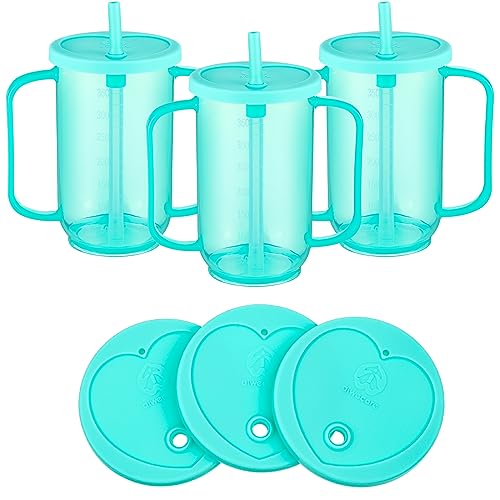
Sliner’s set of three 12-ounce adult sippy cups offers a practical solution for users with limited mobility or swallowing difficulties. The design features two easy handles for a secure grip and a no-spill lid with a straw, helping prevent spills when the cup is tipped. The materials—food-grade PP and silicone—focus on safety and durability, with a transparent body for liquid visibility. Best for home use, hospitals, or nursing facilities where independent drinking is a goal for elderly or disabled patients. Consider this option if you need multiple cups for a caregiver-enabled environment.
Best for: Adults with tremors or dysphagia who value spill prevention and ease of grip. Choose this if you want a ready-to-use, multi-pack solution with clear liquid monitoring.
Limitation: The cups are not designed for high-temperature liquids, and the lid’s straw opening may require occasional cleaning to prevent buildup.
Reflo Smart Cup

Reflo’s 360° rim training cup focuses on teaching natural sipping with a slow-flow, valve-free design. It is made from durable, BPA-free Zylar material and is free of phthalates, supporting pediatric and adult therapy settings alike. While it is described as slow-flow rather than spill-proof, the cup helps users practice controlled drinking without relying on suction. Best for toddlers or adults in transition phases through early therapy or rehabilitation, especially when you want a durable, non-breakable cup that still mimics real drinking.
Best for: Users needing steady, controlled sipping during oral-motor development or transitional therapy. Choose this if you want a long-lasting cup that encourages independent sipping without valves.
Limitation: Not labeled as spill-proof; expect occasional drips if the cup is not held upright.
Ehucon Dysphagia Regulating Cup

The Ehucon dysphagia regulating cup is designed for users who cannot tolerate thickened liquids. It features a fixed handle and a unique lid-slot design that keeps the head and neck still while drinking. An optional 90-degree rotating silicone nozzle allows caregivers to pour a fixed volume slowly, which helps prevent spills onto the user’s face or clothing. Best for moderate to severe swallowing challenges, particularly in home care or clinical settings where precise liquid delivery is important. Consider this if controlled, caregiver-assisted flow is a priority.
Best for: Individuals with dysphagia who require fixed-volume sips and reduced neck movement. Choose this if your care plan includes regulated, predictable liquid delivery.
Limitation: Not ideal for users who need to tolerate thickened liquids or heavy beverages; size and nozzle options may require caregiver setup.
HealthSmart Nosey Cups

HealthSmart Nosey Cups are designed to aid independence by enabling sipping without tilting the head back. Sold in a 3-pack of 12-ounce cups, they are positioned as versatile tools for adults, the elderly, and therapy settings. The design helps prevent sudden gushes, making them suitable for dysphagia or post-surgery recovery scenarios. Best for general hospital or home use where caregivers want predictable, easy-to-use cups that support steady hydration.
Best for: Adults needing a reliable, head-stable sipping experience in daily life or healthcare environments. Choose this if you want a cost-effective multi-pack that supports ongoing use.
Limitation: The cups may not fit every mouth size; some users may prefer a smaller or larger capacity depending on their flow tolerance.
Buying Guide
Key considerations when choosing special needs drinking cups include flow control, spill resistance, and handling ease. Consider the user’s swallowing ability, mobility, and whether the cup will be used at home, in a hospital, or during therapy sessions. Materials should be BPA-free and food-safe, and products with easy-to-clean designs reduce caregiver workload.
- Flow control: Do you need a strict no-spill option or a slow-flow cup to mimic real drinking? Consider cups with fixed-volume nozzles or slow-flow valves.
- Grip and stability: Are two handles or a broad, non-slip base important? For tremors or limited dexterity, easy-grip handles build confidence.
- Portability and durability: Is a glass cup acceptable, or is a unbreakable plastic preferred for busy care settings?
- Cleaning and safety: Look for dishwasher-safe components and BPA-free materials to simplify maintenance and ensure safety.
- Care setting suitability: Some cups are optimized for home use, while others are designed for clinical environments or therapy programs.
Frequently Asked Questions
- What is the best cup for someone who cannot tilt their head back?
Look for nose-friendly or nosey cups with controlled flow and stable sipping without tipping. - Are these cups dishwasher safe?
Many options are top-rack dishwasher safe, but always check the product’s care instructions. - Can these cups be used for hot beverages?
Most are designed for room temperature to cool liquids; check the material and lid design for heat tolerance. - Which cups are best for caregivers in clinical settings?
Durable, unbreakable cups with easy-clean features and fixed-flow options are ideal for care facilities. - Do these cups help with swallowing therapy?
Some are specifically designed for dysphagia or motor-skill therapy, offering controlled flow or lip-stimulation features. - What should I consider when selecting a cup for Parkinson’s or tremor symptoms?
Look for secure grips, spill-resistant lids, and a weight that reduces the chance of dropping the cup.