Looking for a safe, engaging way to introduce kids to STEM and outdoor play? A robust rocket with a parachute combines excitement, learning, and safe landings. The following selection highlights models designed for ages 6 and up, offering two height settings, automatic parachute deployment, and durable foam bodies for repeated launches. Each option emphasizes safe landings and simple battery use, making them ideal for backyard spaces, parks, and open fields. Explore five top choices to help you pick the best fit for your child’s curiosity and play style.
| Product | Brand | Highlights |
|---|---|---|
| Mafbeanl Rocket Launcher for Kids | Mafbeanl | Two height settings, auto parachute, rechargeable |
| Rocket Launcher by VICHTOP | VICHTOP | Two flight modes, safe design, open-space use |
| Fullware Rocket Launcher – 2nd Gen | Fullware | Dual modes, spider design, stable landings |
| SainSmart Jr. Rocket Launcher | SainSmart Jr. | 2025 upgrade, dual height, durable EPP foam |
| Eieymct Rocket Launcher | Eieymct | LED, two flight heights, safe parachute |
Mafbeanl Rocket Launcher for Kids

The Mafbeanl rocket launcher is designed with two distinct height settings, offering both a 100 ft and a 200 ft flight option. The fuselage uses durable EPP foam, and a built-in parachute ejects at maximum altitude to ensure a safe, gradual landing. A rechargeable lithium battery supports multiple flights per charge, reducing maintenance and battery replacement needs. This model emphasizes safety and consistency for junior pilots, making it suitable for ages 8–12 and outdoor play in backyards or parks.
Rocket Launcher by VICHTOP

VICHTOP’s two-height system enables quick progression from 100 ft to 200 ft flights, ideal for building anticipation and skill as kids grow more confident. The design focuses on safety with lighter, softer circular propellers and an EPP foam body. The parachute deploys automatically at peak altitude for a gentle return. Suitable for outdoor spaces such as backyards and parks, this option supports imaginative play while fostering interest in flight and space science.
Fullware Rocket Launcher – 2nd Gen

Fullware’s 2nd generation model highlights a reinforced, wider launch base and a thicker rocket body for greater stability. The dual launch modes allow children to choose between 100 ft and 200 ft flights. The lightweight EPP foam construction ensures safe landings, while a built-in parachute deploys at peak altitude to prevent rough landings. The spider-inspired visual design adds a fun, eye-catching element that can appeal to kids who enjoy bold, themed toys.
SainSmart Jr. Rocket Launcher
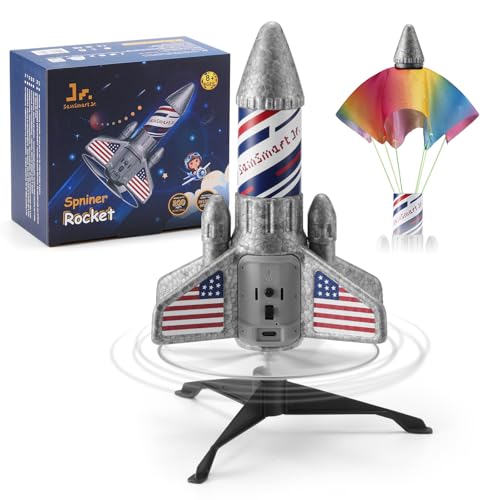
The 2025 upgrade version from SainSmart Jr. improves stability with more powerful boosters and enhanced symmetry for smoother launches and landings. It supports two flight heights—100 ft for backyard use and 200 ft for larger outdoor spaces. The parachute and ultra-light EPP foam construction provide safe landings after each flight, making it a practical choice for families seeking durable, science-inspired toys that encourage outdoor exploration.
Eieymct Rocket Launcher

The Eieymct model adds LED features for visual appeal and two flight heights, letting kids choose between 100 ft and 200 ft launches. The parachute deploys automatically at peak altitude for a controlled descent, and IPP foam construction helps ensure resilience against repeated launches. This option is well-suited for outdoor play in open fields and can be a captivating gift for boys ages 8–12 who enjoy space-themed toys.
Buying Guide: How To Choose The Best Rocket With Parachute Toy
- Safety and materials: Look for lightweight EPP foam bodies and soft, rounded edges to minimize impact during landings. Durable fuselages and parachutes should deploy at peak altitude for a controlled landing.
- Flight height options: Two-height systems (typically 100 ft and 200 ft) accommodate different play areas—from backyards to parks—and help children gradually master control.
- Battery and reusability: Rechargeable lithium batteries and quick charge times reduce downtime between launches. Consider models offering 20–40 flights per charge depending on height setting.
- Stability and design: A wider launch base and reinforced structures improve stability. Thematic designs (like spider patterns) can enhance appeal for kids who gravitate toward bold aesthetics.
- Ease of use: Simple launch controls are ideal for younger kids; models with one- or two-press launch buttons suit a fast learning curve while preserving safety.
- Outdoor usability: Ensure the toy performs well in common spaces—backyards, parks, beaches—and that it’s light enough to retrieve easily after landing.
- Age range and learning value: Most options are suitable for ages 6–12 and support STEM curiosity through hands-on experimentation with flight concepts.
- Maintenance and accessories: Check availability of replacement parts, parachutes, and batteries. A modular design can extend playtime and reduce total cost of ownership.
- Warranty and safety certifications: If available, verify manufacturer safety claims and any included age recommendations to ensure compliance with local guidelines.
Notes On Use And Safety
Always supervise children during rocket launches. Use in open, unobstructed outdoor areas away from roads, trees, power lines, and spectators. Follow the manufacturer’s charging and maintenance instructions to maximize safety and performance. Store batteries and components out of reach of younger children when not in use.