Looking for an engaging and educational way to introduce children to yoga, mindfulness, and self-regulation? These kids yoga flash cards are designed for home, classroom, and therapy use. Each deck offers easy-to-follow poses, bright illustrations, and quick instructions that suit beginners and kids with varying attention needs. The top picks below are categorized to help teachers, parents, and therapists choose the best fit for their group or individual child.
Summary table of selected products
| Product | Best For | Why It Stands Out | Limitations |
|---|---|---|---|
| Yoga Cards for Kids – 75 Poses | Preschool to elementary, classroom use | Large variety, bilingual titles, durable double-sided cards | May be too many poses for very young kids |
| Yoga Cards for Kids – Pose Deck | Structured SEL sessions | 32 illustrated poses, focused calming routines | Fewer poses than some decks |
| gisgfim Yoga Cards – 30 Poses | Home gym, quick sessions | Compact set, durable storage box, kid-friendly art | Smaller pose library |
| MOLLYBEE KIDS Preschool Yoga Cards | Theme-based explorations | 40 poses across themed adventures | May require guided storytelling |
| Yoga Cards – 100 Real-Life Poses | Progressive learners | Real-life photos, broad pose range | Deck is larger; more to manage |
Yoga Cards for Kids – 75 Yoga Meditation Poses

Best for teachers and therapists introducing a broad yoga repertoire. The 75 cards cover a range of poses with Sanskrit and English titles on the front and simple step-by-step instructions on the back. The film-coated cards are durable for daily classroom use, and their small size makes them easy for kids to handle. This deck is ideal for preschool through elementary students, especially during quick brain breaks or SEL activities. Caution: managing a large deck requires organized routines to avoid overwhelm for very shy learners.
Best for: classroom teachers, therapists, and parents seeking variety and a complete kit for structured sessions.
Why selected: It offers comprehensive exposure to yoga poses, supports SEL and self-regulation, and is designed for guided learning with adult support.
Limitation: A larger set can be intimidating for a quick session with younger kids; consider pairing with a shorter subset for younger audiences.
Yoga Cards for Kids – Pose Deck for Beginners

Best for SEL-focused sessions and calm-down routines. This deck includes 32 illustrated poses with guided instructions, supporting kids in releasing energy and resetting during transitions. Great as a classroom tool or therapy supplement, it helps educators structure mindfulness practices and sensory breaks. Caution: with fewer poses, it may be less versatile for long-term practice unless combined with other activities.
Best for: teachers and therapists prioritizing predictable routines and short, repeatable sessions.
Why selected: It provides clear, guided sequences that help children practice focus, relaxation, and self-regulation in a structured way.
Limitation: Limited pose variety means more repetition; best used as part of a broader yoga program.
gisgfim Yoga Cards – 30 Poses With Cartoon Box
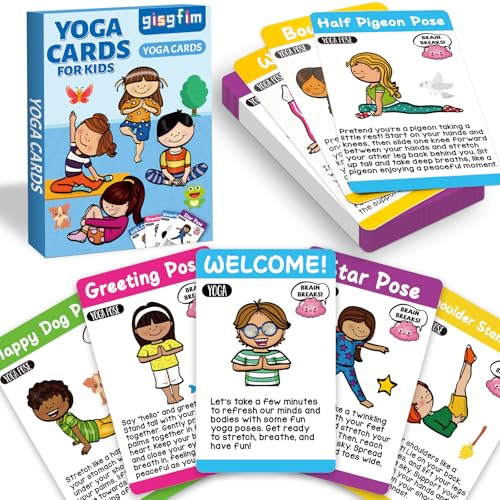
Best for home use and casual practice. The 30-pose set comes with a cartoon storage box, making it easy to keep cards organized and accessible. Cards are thick, with rounded edges and film-coated fronts for easy cleaning. This deck supports mindfulness, focus, balance, and gentle movement. Caution: smaller pose library means it’s more suited for quick sessions rather than extended practice.
Best for: families and individuals looking for a compact, visually engaging set for home or small classrooms.
Why selected: Durable, portable, and easy to wipe clean; visuals are engaging for younger children and beginners.
Limitation: Fewer poses may require supplementing with additional cards for longer routines.
MOLLYBEE KIDS Preschool Yoga Cards

Best for themed, imaginative sessions. This deck features 40 poses across engaging activity themes such as Around the World and On the Farm. Themed sequences spark curiosity and support motor development, mindful movement, and cultural awareness. Caution: requires facilitator guidance to smoothly tie poses into the theme and narrative.
Best for: preschoolers and early elementary students who enjoy storytelling and thematic exploration.
Why selected: Combines yoga with creative themes to sustain engagement and encourage regular practice.
Limitation: Thematic framing may need additional prompts from adults to maximize learning outcomes.
Yoga Cards – 100 Real-Life Poses

Best for progressive learners and comprehensive practice. This deck showcases 100 real-life poses with photos of kids performing them, which helps children understand alignment and adapt poses to their bodies. It supports home, gym, and classroom yoga, transitioning from beginner to more advanced moves. Caution: the larger deck requires more planning to prevent fatigue in shorter sessions.
Best for: learners who want a broad pose repertoire and clear visual references.
Why selected: Real-life photos provide practical guidance and motivate kids to try new poses confidently.
Kids Yoga Cards Challenge and Poses

Best for progressive practice and cooperative play. This deck includes 40 poses with partner poses and empowerment mantras. Poses are rated 1-5 stars to guide difficulty, making it suitable for mixed-age groups and classrooms. Caution: star-based ratings may require adaptation for children with significant mobility differences.
Best for: mixed-age groups and structured challenges that grow with the child.
Why selected: Combines movement with mindfulness cues and collaborative play, aligning with Montessori and Waldorf-inspired activities.
Buying Guide: Key Purchase Considerations
- Age and ability: Choose decks with a pose count and difficulty level aligned to your child’s or group’s age and motor skill range.
- Session goals: For SEL and self-regulation, prefer decks with guided instructions and calm-down routines; for fitness, pick decks with a larger pose library and real-life photos.
- Format and durability: Double-sided, film-coated cards resist wear in classrooms; consider a storage box or organizer to keep sets orderly.
- Engagement factors: Bright illustrations, fun themes, and clear visuals help maintain attention; thematic decks can inspire storytelling and imaginative play.
- Implementation setting: Home practice benefits from smaller, manageable decks; classroom and therapy settings can leverage larger, varied decks for longer sessions.
- Accessibility: Look for bilingual titles or simple English instructions to support diverse learners; ensure instructions are easy to follow for adults guiding kids.
FAQ
- What is the main benefit of kids yoga cards?
They provide a visual, structured way to learn poses, promote focus, and support self-regulation in children. - Which deck is best for a short classroom transition?
The 32-pose deck offers quick brain breaks with guided instructions suitable for transitions. - Are real-life photo cards better than cartoon cards?
Real-life photos can help kids imitate poses more accurately; cartoons may improve engagement for younger children. - Can these cards support children with autism or sensory needs?
Yes, many decks are designed to aid sensory regulation and SEL skills, particularly in classroom therapy settings. - How should I choose between a large and a compact deck?
Large decks suit ongoing, varied practice; compact decks work well for short sessions or travel. - Do these cards require additional equipment?
A yoga mat and a calm space enhance practice, but cards themselves are self-contained learning tools.