Escape the room box games offer a compact, cinematic mystery experience that fits on a coffee table. This guide highlights five strong options for American players, each designed for different kinds of players—from families and casual game nights to avid puzzle enthusiasts. Whether you want a quick 60-minute challenge or a deeper brain-teaser weekend, these selections help you recreate the thrill of a live escape room at home.
| Product | Brand | Best For |
|---|---|---|
| Escape Room The Game, Version 2 | Identity Games | Teams seeking a multi-adventure, timer-driven challenge |
| ThinkFun Escape The Room Secret of Dr. Gravely’s Retreat | ThinkFun | Families and mixed-age groups; brainy, puzzle-leaning players |
| Mattel Games Escape Room In A Box The Werewolf Experiment | Mattel Games | Teens and adults who enjoy collaborative, puzzle-heavy play |
| iDventure Cluebox The Trial of Camelot | iDventure | Single or two players who love tactile, reusable wooden puzzles |
| Thames & Kosmos EXIT: The Enchanted Forest | Thames & Kosmos | Family game night with a card-based, story-driven format |
Escape Room The Game, Version 2

Overview: This set offers four distinct escape room adventures, each in three parts, with a Chrono Decoder timer and themed sound effects. Players have 60 minutes to enter correct keys and escape. The app adds an immersive soundtrack to each scenario. Best for teams seeking a richer, multi-challenge night with escalating difficulty.
Why it’s chosen: Best for groups that want a structured, timer-driven experience across several challenges. The Chrono Decoder and app integration provide a consistent atmosphere and pacing. Caution: the physical components and app features rely on the included hardware and software; setup complexity can be higher for casual players.
ThinkFun Escape The Room Secret of Dr. Gravely’s Retreat
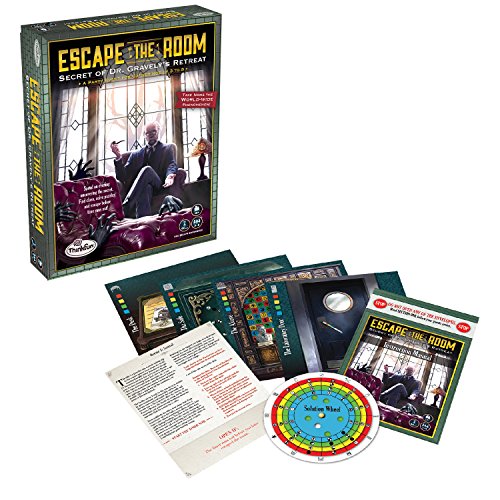
Overview: A trusted ThinkFun puzzle for 3–8 players aged 13 and up. Players unlock clues via scene cards and sealed envelopes, guiding a storyline to unravel a mystery.
Why it’s chosen: Best for families and mixed-age groups, combining narrative immersion with logical deduction. Caution: the game relies on a paper-and-physical-clue format, which may require careful handling and re-packing for re-playability.
Mattel Games Escape Room In A Box The Werewolf Experiment

Overview: A cooperative group game with 19 puzzles and a one-hour limit. The twist includes optional Alexa integration to enhance gameplay atmosphere.
Why it’s chosen: Best for teens and adults who enjoy fast-paced problem solving and teamwork. Caution: the sequential puzzles can be challenging, and younger players may need guidance to stay engaged.
iDventure Cluebox The Trial of Camelot

Overview: A reusable 60–90 minute brain teaser housed in a wooden puzzle box. Designed for 1–2 players and features a story about Camelot and Merlin.
Why it’s chosen: Best for puzzle purists who value a tactile, physical solution process and collectible, sustainable design. Caution: performance hinges on solving multiple small locks and clues; players who prefer quick resolves may find it slow.
Thames & Kosmos EXIT: The Enchanted Forest

Overview: A classic card-based, at-home escape room with a fairy-tale atmosphere. Suitable for 1–4 players, ages 12+, offering clue cards to guide you through the forest mystery.
Why it’s chosen: Best for family game nights and new escape room players who appreciate a guided, story-forward experience. Caution: card-based puzzles can be text-heavy; reading comprehension helps pace progress.
Buying Guide: Key Purchase Considerations and Comparisons
What should you consider when choosing an escape-the-room box game?
- Player count and age: Some games target families or younger players, while others are best for 2–4 players or larger groups. Match your group size to the game’s included recommendations.
- Time commitment: Most boxed escape experiences run about 60 minutes. If you want longer sessions, choose a multi-adventure set or a title with more puzzles.
- Theme and tone: Choose a vibe that fits your group—mystery, sci-fi, fantasy, or pirate legends. Themed atmospheres can heighten immersion.
- Mechanics: Look for a mix of physical puzzles, logic challenges, and story elements. Reusability (like Clueboxes) can add value for repeated play.
- Tech integration: Some games include companion apps or Alexa integration for enhanced ambiance. Decide if digital aids improve or distract from the experience.
- Replayability: Puzzles that can be reset or reassembled increase long-term value. Wooden puzzle boxes and reusable components are particularly durable.
What makes a good at-home escape room experience?
A strong option balances clear instructions, engaging narrative, and a paced difficulty curve. The best games provide a sense of progression, with escalating challenges and a satisfying finale. If your group prefers social storytelling, select titles with strong theme and pacing. If you love hands-on puzzles, prioritize tangible components and reusability.
How to set up for a successful game night
Prepare a quiet, well-lit space and gather a timer or watch. Brief participants on the general objective, assign roles (facilitator, clue tracker), and create a comfortable play area. For younger players, consider co-playing or guiding hints to maintain momentum without giving away solutions.
FAQ
- What is the typical duration of these games? Most experiences run about 60 minutes per session.
- Are these suitable for families? Yes, many titles target families with age-appropriate puzzles and clear instructions.
- Do these games require apps? Some include companion apps or optional digital effects, but most function with the physical components alone.
- Can I reuse components after finishing? Several options feature reusable puzzles or re-packable boxes for future play.
- Which game is best for a quick two-person challenge? Cluebox style games, like The Trial of Camelot, are well-suited for 1–2 players and offer a compact, focused puzzle experience.
- Are these suitable for teens? Many are designed for teens and adults, with puzzles that challenge logical reasoning and problem-solving skills.